It’s that time of year again: a chance to commit to a New You. This year, your best resolution isn’t about diet or exercise; it’s about sharpening your mind and committing to intellectual honesty.
It’s never been harder to sort fact from fiction online. Every day, our feeds are flooded, and as professionals, our credibility is built on facts, not noise.
We all know the danger: misinformation (innocent mistakes) and disinformation (deliberate lies) can spread faster than anything else—damaging reputations and skewing market perception.
Maybe it was all those research papers from my MBA program, but I quickly learned that the single most important question you can ask is the bedrock of effective critical thinking:
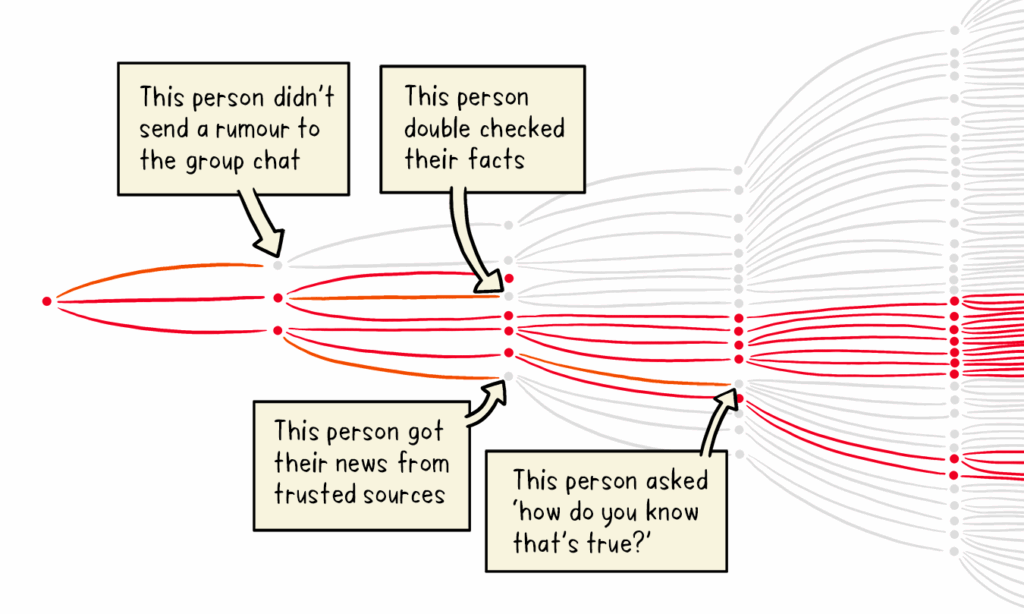
“How do I know this to be true?”
That question is the starting point. To navigate the noise, uphold your professional integrity, and commit to a more discerning New You in 2026, here is the 7-step model I use to check the facts before I share, quote, or act:
The 7 Steps to Intellectual Fitness
Identify the Author: Who wrote this? As a 2026 resolution, resolve to know the credentials, affiliations, and conflicts of interest of every source you rely on.
Go Beyond the Headline: Headlines are designed to trigger emotion. Commit this year to reading the entire article to understand the context and the actual substance, protecting yourself from clickbait.
Check the Date: Is the information current and relevant? Make it a habit to check the timestamp. An old piece of data presented as new is one of the fastest ways to spread inaccuracy.
Assess the Source: Is the publication, website, or channel reputable? Look for high editorial standards, transparency, and a track record of factual accuracy.
Examine the Supporting Evidence: Does the author cite primary sources, data, or experts? If the claims are bold, the proof must be stronger than ever this year.
Turn to Fact-Checkers: When in doubt, utilize independent, non-partisan fact-checking organizations. Don’t be too proud to outsource the verification process.
Check Your Own Biases: This is the hardest resolution. We naturally seek information that confirms what we already believe. Commit to being honest: are you accepting this because it’s true, or because you wantit to be true?
Let’s do our part to spread truth, not rumors. We have the power to stop a rumor simply by asking a good question. I truly believe that in the end, the truth always prevails.
What’s one online source you resolve to scrutinize more closely this year?
Stop starting the year with the same generic resolutions. To gain a true professional edge in 2026 and sharpen your client communication, you need a different perspective.
Grab “Visual Thinking” by Temple Grandin.
It’s not soft theory: it’s a tactical guide to how your clients see properties, understand financing, and ultimately, close deals. It will fundamentally change how you approach every listing presentation and loan consultation.
Your Brain is a Deal-Closing Machine. Is It Visual?
Grandin explains what many top professionals intuitively know: not everyone thinks in a linear, word-based format. She identifies three core ways people process information, which is critical for our industry:
The Object Visualizer: The brain is a high-definition engine. They see the finished flip, the hidden structural issue, and the furniture placement before the first bid. They process spatial data, not just textual descriptions.
The Pattern Thinker: These professionals and clients excel at systems. They buy the CMA, the long-term appreciation chart, and the detailed loan structure. They look for logical flow and market trends.
Stop Selling Words, Start Selling Vision
Understanding these cognitive types is your massive communication advantage. Tailor your approach to meet your client where their mind actually is:
Closing Visual Clients: Stop using vague language like “great potential.” Present high-quality staging, detailed floor plans, and digital renderings. If they can see the final product—a clear visual—the objection drops.
Engaging Pattern Clients: Don’t waste time on emotional appeals or curb appeal. Lead with the numbers. Use clean data visualizations, precise market metrics, and financial models. They buy logic, not emotion.
This book helps you recognize these hidden gifts in your clients, allowing you to tailor your pitch and close more effectively.
The 2026 Mandate: Understand Your Client’s Mind
If you want to refine your marketing, strengthen team collaboration, and connect instantly with diverse clients, “Visual Thinking” is your playbook.
This New Year, your best resolution is to learn how to communicate across the cognitive spectrum. It just might be the highest-ROI investment you’ll make.
Action Item: How would understanding a client’s “visual thinking” style change the way you prepare for your next listing appointment? Think less talk, more tools.
We all know the feeling: you hit a goal, business is steady, and you take a moment to breathe. You’re pleased. But for us self-employed owners, that “pleased” feeling can quickly become a dangerous comfort zone. The moment we feel done is the moment we start falling behind.
That’s why I keep an old favorite on my shelf: “Pleased But Not Satisfied” by D.L. Sokol. It’s not a new book, but its core philosophy – endorsed by Warren Buffett – is the ultimate mindset for sustained success in our ventures.
This isn’t theory; it’s a handbook for action.
The Mindset Shift: From Comfort to Continuous Growth
Sokol’s title isn’t just a catchy phrase; it’s a mandate for how we can run our businesses:
Be Pleased (Acknowledge the Win): Stop, recognize, and celebrate your hard-earned wins. You landed that big client, finished that difficult project, or finally hit your revenue goal. Give yourself credit.
But Not Satisfied (Immediately Look Ahead): The minute you feel truly “satisfied,” you stop growing. You have to maintain that relentless drive to push further. For us, that means constantly asking: How can I be better tomorrow?
This is the continuous improvement journey that allows us to build a durable business, not just a successful month.
Your Action Plan: Three Classic Rules
Sokol’s wisdom is all about disciplined fundamentals. Here are three actionable takeaways for every self-employed professional:
Rule 1: Commit to Conservative Analysis. Don’t chase trends based on hype. Every major investment – new software, a large marketing campaign, or a business pivot – must be rooted in conservative, thoughtful economic analysis. If the numbers don’t clearly support it, slow down.
Rule 2: Measure What Matters (Relentlessly). As self-employed owners, we often manage every hat. Sokol stresses the discipline of setting clear annual goals and measuring them consistently – like monthly – to drive outcomes. Don’t just track revenue; track client satisfaction scores, project completion times, or lead conversion rates. If you can’t measure it, you can’t improve it. My favorite? New Appointments set.
Rule 3: Integrity is Your Brand. Sokol’s principles highlight integrity as non-negotiable. For us, this means doing what you say you will do, every single time. Your reputation is your only non-renewable asset. Don’t complicate things; if you feel you have to hedge, you’re on the wrong path.
The book is a great reminder that building something that lasts isn’t about being the flashiest; it’s about precision and disciplined consistency. It’s about being proud of your past work, but staying hungry for the next 1% (or better) improvement.
What’s the one classic business book that keeps your drive going?
Ever feel like you’re constantly busy, but not actually getting anywhere? Drowning in to-do lists and dreaming of more time for… well, living? If so, you’re not alone. In our hyper-connected world, the urge to do more can feel overwhelming. But what if the secret to a richer, more fulfilling life wasn’t about adding more tasks, but cleverly subtracting them?
That’s the radical yet incredibly practical premise of Ari Meisel’s game-changing book, “Less Doing, More Living.”
The Core Philosophy: Your Time is Gold
Meisel, who developed his system after battling a debilitating chronic illness, realized that true productivity isn’t about working harder; it’s about working smarter – so smart, in fact, that you free up vast amounts of time, energy, and mental bandwidth for what truly matters to you.
His entire “Less Doing” philosophy rests on three powerful, interconnected pillars:
Optimize: This is where you get ruthless. Analyze every task, process, and habit. Identify the 20% that delivers 80% of your results (hello, Pareto Principle!). Then, strip away the unnecessary, simplify the complex, and find the absolute leanest path to completion.
Automate: Why do a task repeatedly when a machine or system can do it for you? Leverage technology, smart apps, and recurring services to take mundane, repetitive mental and physical tasks off your plate. Free your brain for creative thinking, not remembering to buy toilet paper.
Outsource: You are not an island. Not every task needs your specific touch. Learn to confidently delegate tasks that don’t require your unique expertise to virtual assistants, local services, or even smart delivery solutions. Your time is valuable – don’t spend it on tasks someone else can do more efficiently.
By systematically applying these three principles across every facet of your existence – from your work projects to your daily errands, your health routines to your financial management – you begin to sculpt a life that is intentional, efficient, and deeply satisfying.
10 Hacks from “Less Doing, More Living” to Start Today
Ready to stop feeling overwhelmed and start reclaiming your life? Here are 10 of the most impactful strategies from “Less Doing, More Living” that you can implement right now:
Build Your External Brain: Stop trying to remember everything! Use cloud-based tools (Evernote, Notion, Google Keep) to capture every idea, to-do, link, and piece of information. Free up your mental RAM for higher-level thinking.
Embrace the 80/20 Rule (Pareto Principle): Seriously, this is huge. What 20% of your efforts generate 80% of your desired outcomes? Double down on those, and critically evaluate or eliminate the rest.
Batch Similar Tasks: Instead of context-switching constantly, group similar tasks. Dedicate blocks of time to processing all emails, making all phone calls, or tackling all errands at once. You’ll be amazed how much faster you become.
Set Smart Limits (Upper & Lower): Define a maximum you won’t exceed (e.g., 50 possessions, 30 minutes of social media per day) and a minimum you commit to (e.g., exercise 3x/week, one date night per month).
Automate Your Essentials: Tired of running out of coffee or pet food? Set up recurring deliveries for non-perishable items. Services like Amazon Subscribe & Save or local grocery delivery are your friends.
Outsource Relentlessly: Your time is finite. Delegate administrative tasks, research, or even personal errands to virtual assistants or local task services. What’s your hourly rate vs. theirs?
Customize Your World: Make your environment work for you. This might mean custom software setups, tailored clothing subscriptions, or even unique storage solutions that simplify your daily flow.
“IKEA Instruction” Your Processes: Break down every recurring task into the simplest, most foolproof, step-by-step instructions. The goal: anyone (or even a bot!) could follow them.
Digitize Your Finances: Leverage apps and services (like TrueBill for subscriptions, automated budgeting tools) to track spending, identify savings, and simplify your financial life.
Prioritize Foundational Wellness: None of this matters if you’re burnt out. Optimize your sleep, fuel your body with nutritious food (especially healthy fats), and integrate efficient exercise (like HIIT) to ensure you have the sustained energy to live.
Ready to transform your productivity and create more space for joy? Grab a copy of “Less Doing, More Living” and start implementing these powerful hacks today!
A System Will Produce What A System Will Produce, Nothing Less and Nothing More!
Why does this matter? Household formation is the engine of economic demand. It drives the need for new housing, furniture, appliances, cars, and a whole host of services. A slowdown here isn’t just a blip; it’s a fundamental recalibration.
Two powerful demographic waves. One is the “Silver Tsunami” – the massive Baby Boomer generation (born 1946-1964) entering their 70s, 80s, and beyond, vacating homes and demanding more healthcare. The other is the smaller, tech-savvy Gen Alpha, just beginning to form households.
As leaders, recruiters, and top performers in the real estate and mortgage lending space, we have to keep our eyes on the trends shaping the very inventory we sell and finance. And right now, one of the most significant and fascinating shifts is the massive office-to-residential conversion boom, with New York City leading the charge.
This isn’t just about repurposing old buildings; it’s about pioneering new architectural and development strategies that are creating an entirely new playbook for urban real estate across the country.
The New York Story: From Desk to Doorstep
According to a fantastic piece in the Wall Street Journal (authored by Brian McGill, Max Rust, and Peter Grant, which I highly recommend), New York developers have converted nearly 30 million square feet of office space into homes over the past two decades. What’s truly exciting is that the pace has accelerated since the pandemic.
Why? The perfect storm:
Sky-High Vacancy: Post-COVID office vacancy soared past 20% in Manhattan.
Unmatched Demand: Manhattan’s residential market, with its median $4,500 rents for a one-bedroom, provides a strong financial incentive.
Government Support: Tax abatements and expanded zoning approvals are greasing the wheels.
The biggest hurdle has always been the buildings themselves—too wide, too mechanically complex, and lacking the necessary light and air for livable apartments. But the developers are solving this with incredible ingenuity.
The Architectural Hacks That Change Everything
This is where the true innovation lies, and it’s a masterclass in creative problem-solving we should all be studying. Developers are making transformations possible with “architectural hacks” like:
Carved Light Wells & Notches: Developers are literally demolishing chunks of a building’s podium (like at 750 Third Avenue) to create a massive ‘notch.’ This brings in the crucial light and air needed for apartments in deep-set office footprints.
Strategic Wall-Offs: Repurposing the building’s interior core (elevators, restrooms) and hiding structural beams within new inner walls allows for maximum light exposure in the new residential units.
Code Compliance by Design: As seen in the 750 Third Avenue project, bedrooms are strategically placed near the outer exterior to comply with building codes for sunlight, while interior spaces (where daylight isn’t required) are perfect for bathrooms.
For example, the colossal 750 Third Avenue conversion—a 1958 office building where occupancy plummeted to 17%—will be completed in 2029, delivering 680 apartments and a full suite of modern amenities. This is a massive shift, and its size continues a trend toward larger, more ambitious conversion projects.
What This Means for Our Industry
Even though these conversions will only scratch the surface of New York’s office surplus, the impact on our industry is profound:
New Inventory Pipeline: Across the country, the pipeline for future apartment units from office conversions is exploding—up to 78,500 units nationally, per RentCafe.com. This is future rental and condo product for our agents and MLOs to list and finance.
A Model for Other Cities: The design breakthroughs pioneered in Manhattan—the cut-through notches, the strategic floor plans—are creating a reproducible “playbook.” This accelerates the pace of conversion in every other major metro area.
A Testament to Opportunity: As Robert Fuller, principal of architecture firm Gensler, stated: “There are more case studies that prove the naysayers wrong.” This entire movement is a powerful reminder that opportunity exists in every market condition, provided we are creative enough to find it.
We need to pay close attention to this segment of the market. It represents a resilient response to changing urban needs and a huge opportunity for those of us who understand how to capitalize on adaptive reuse.
Think about it for a moment: We are in the business of relentless, proactive execution. You are the masters of the repeatable task – the pipeline management, the continuous cold call, the difficult underwriting. You have internalized the discipline required to succeed in a high-stakes, low-feedback environment.
This low-feedback cycle is precisely where the greatest threat to high-performance lies: burnout. The daily grind overwhelms the long-term goal because the emotional return on effort is minimal.
The solution is not to stop the work, but to redefine its energy source. The key is to harness the profound lesson taught by Tony Robbins:
The moment that changes your life isn’t what happens – it’s the meaning you give it.
The Limiting Meaning That Halted Tony Robbins’ Father
Tony Robbins often recounts the singular moment that defined his mission. His family was struggling severely with poverty and food insecurity. One Thanksgiving, they faced having only canned vegetables for dinner.
Then, a defining knock came at the door.
A stranger stood there with a complete, unexpected feast. For the young Tony, the sight of the food was instantaneous relief and hope.
But when his father arrived, the same event triggered a response of shame and anger. He saw not a gift, but a symbol of his failure. “We don’t take charity,” he declared, attempting to reject the meal.
The delivery man intervened with a powerful truth: “Someone out there cares about your family… Please don’t let your family go hungry because of your pride.”
His father retreated, defeated. He had assigned a limiting meaning to the event: public failure, charity, humiliation.
Tony, observing the same moment, assigned an empowering meaning:love, connection, possibility.
Your Unique Power in the Repetitive Task
This difference—the distinction between a limiting and an empowering meaning—is the most potent competitive advantage you have against burnout and stagnation.
Tony’s father saw a limiter; Tony saw a fuel source that eventually led to his life’s mission and the provision of over one billion meals.
For you, in the necessary repetition of your business:
Limiting Meaning (The Grind)
Empowering Meaning (The Mission)
“This is just paperwork / a quota I must hit.”
“This is the foundation for generational wealth / a company’s next trajectory.”
“This deal failed because of my effort.”
“This deal taught me market tuition necessary for the next massive win.”
The secret to moving past the grind is to inject meaning into the mechanics. The energy for your relentless action comes not from the external result (which is delayed), but from the internal, instantaneous meaning you assign to the effort.
You cannot control external variables—the market, interest rates, or competitor moves. But your power, the unique human ability that allows you to succeed where others quit, is to define your own reality.
Meaning –> Emotion –> Action –> Destiny
Use the Tony Robbins lesson: Don’t let pride, frustration, or lack of immediate feedback assign a limiting meaning to your disciplined actions. Choose the meaning that expands your heart, your vision, and your next opportunity.
Your Challenge:
Identify the most difficult, repetitive task you will face this week. Before you start it, explicitly write down the empowering meaning you will assign to that action. This conscious assignment will immediately shift your emotional state and your performance.
If you’ve been in this industry for more than a minute – whether you’re running the brokerage, recruiting the talent, or closing the loans – you know one thing is true: This business is a rollercoaster.
We often look at the top producers and wonder what their secret is. Is it a better CRM? A magic script? Better leads?
Usually, it’s none of those things. After years of watching people rise, fall, and rise again, I’ve realized that long-term success really comes down to how we answer three simple, human questions.
If you are feeling stuck, or if you are trying to guide a team member who is struggling to break through, let’s look at these three keys together.
1. Do You Start Quickly?
We all struggle with the desire to be perfect. We want the marketing flyer to look exactly right before we mail it. We want to know the exact answer to every underwriting scenario before we talk to the client.
But waiting for “perfect” is often just fear wearing a fancy suit.
Here is the encouragement you might need today: You don’t need to have it all figured out to take the first step.
The Shift: Give yourself permission to be “in progress.”
The Action: Make the call before you feel fully ready. Launch the program before the brochure is polished. The magic happens in the doing, not the planning. Momentum is a wonderful thing, but it can only happen if you push off the starting block.
2. Do You Learn From Your Mistakes Quickly?
This is the hardest one, isn’t it? When we lose a deal, miss a recruit, or fumble a presentation, it hurts. We are passionate people, and we take our work personally.
But the highest performers aren’t the ones who never mess up. They are simply the ones who shorten the time between the mistake and the lesson.
Instead of beating yourself up for three days (we’ve all been there), try to look at the stumble with curiosity instead of judgment.
Ask yourself: “Okay, that didn’t go as planned. What is one small thing I can tweak for next time?”
The Goal: Be kind to yourself. Treat the mistake as expensive tuition—you paid for the lesson, so make sure you cash in the knowledge and move forward lighter and smarter.
3. Do You Stay in the Game?
There are seasons in Real Estate and Mortgage when the wind is at our backs, and seasons where we are walking uphill in the snow.
The third key—and perhaps the most important—is simply refusing to go home.
It is easy to be great when the market is hot. But character and true wealth are built in the quiet times when you are doing the work and not seeing immediate results.
The Truth: The compound effect is real. The relationships you nurture today, even when they don’t result in a paycheck this month, are the seeds for your harvest next year.
Keep Going: If you are in a tough spot right now, remember that you are planting. Don’t dig up the seeds just to check if they are growing. Trust the process. Stay in the game.
A Note to You
Whether you are leading the C-Suite or originating your first loan, you are capable of incredible growth.
You don’t have to be perfect. You just have to start, be willing to learn when you stumble, and possess the courage to keep showing up.
Mark Schniepp’s 2026 economic forecast provides a concise overview of critical trends and risks that directly affect the real estate, lending, and construction sectors. Here’s a recap of Mark’s report:
1. Core Economic Projections
The consensus for the U.S. economy points toward continued, albeit modest, growth:
U.S. GDP Growth: The forecast stands at a moderate 1.8% for 2026, an improvement over earlier projections. This indicates resilient, stable underlying economic activity.
Global Growth: International Monetary Fund (IMF) projections suggest a slight global slowdown, with world GDP at 3.1%, which may exert a marginal drag on U.S. performance.
Inflation Outlook: Expected U.S. Consumer Price Index (CPI) inflation is projected to settle in the 2.9% to 3.5% range. The UCLA Anderson forecast specifically targets an average of 3.2%. Controlling inflation remains paramount for monetary policy stability.
2. Monetary Policy and Upside Risks for Housing
The most significant factors poised to benefit interest-rate-sensitive sectors, primarily housing, are tied to monetary policy flexibility:
Lower Inflation Scenario: The primary upside risk is inflation proving lower than anticipated. This outcome would permit the Federal Reserve to continue an accommodative monetary policy, which directly translates to lower borrowing costs and increased affordability for buyers and developers.
Technology Investment: Accelerated productivity gains stemming from continued investment in Artificial Intelligence (AI) are cited as a key driver that could propel overall economic growth beyond baseline estimates.
Corporate Performance: Stronger corporate earnings and a less volatile global political climate could support heightened stock market values, positively impacting consumer wealth and confidence.
3. Immediate Impacts and Labor Market Constraints
The Government Shutdown Effect
The recent 43-day federal government shutdown is estimated to reduce Q4 2025 GDP growth by approximately half a point. Crucially, this is viewed as a transitory impact, with the lost output and spending expected to be fully recovered in the first two quarters of 2026.
Structural Labor Challenges
The labor market faces structural headwinds, with no meaningful turnaround in broad job creation anticipated for 2026. This directly affects demand for housing and labor supply for construction:
AI Displacement: The widespread adoption of AI is expected to challenge job growth, leading to potential contractions in workforces across industries like software development, professional services, and customer service.
Employment Opportunities: While overall job growth stagnates, specific opportunities are expected in sectors such as healthcare and accommodation and food services.
AI Vulnerability: A key risk remains the sustainability of AI optimism. Any setback in realizing productivity gains from AI could expose the economy to underlying drags (e.g., policy impacts from tariffs or restricted immigration), reducing potential economic output.
This forecast underscores that success in 2026 for the real estate and lending markets will hinge on the Fed’s ability to navigate inflation toward its target, enabling continued easing, and monitoring the dual impact of AI on both economic productivity and employment stability.
For the real estate and lending community, the major opportunity is the potential for lower borrowing costs. If inflation proves milder than expected, the Fed can ease policy, directly benefiting interest-rate-sensitive housing demand and affordability. The primary business risk, however, is a stagnant labor market driven by AI displacement in high-earning, white-collar sectors; this necessitates that firms proactively target recession-resilient client bases, such as the healthcare and hospitality workforces, while leveraging internal AI tools for efficiency to thrive in what will remain a competitive, volume-sensitive environment.
A System Will Produce What A System Will Produce, Nothing Less and Nothing More!
If you’re reading this, you’re not just showing up. You’re running a brokerage, leading a team, recruiting top talent, or consistently closing high-value deals. In short, you’re an elite performer in the most demanding industry there is.
But what separates the $10M producer from the $25M one? What allows one brokerage to dominate its market while another stagnates?
It’s not usually one massive “break.” It’s the relentless, almost invisible power of the Compound Effect.
The Foundation of Exponential Growth
Forget the financial jargon for a moment. The Compound Effect, popularized by Darren Hardy, is the principle that small, smart choices + consistency + time = radical difference.
Think of it this way: Success is not built in heroic, single efforts. It’s built in the daily, repeated execution of good habits.
A tiny shift in habit, done every single day without fail, is what eventually launches you past the competition. The reason most people miss this is simple: in the beginning, the difference between the smart choice and the bad choice is virtually undetectable. The results are subtle, making it easy to quit. But I assure you, in the high-stakes world of real estate and lending, this principle is your hidden engine for exponential growth.
How to Leverage Compounding for Dominance
Here’s where the rubber meets the road. Let’s look at three critical areas where applying this effect can transform your business, not next year, but starting today.
1. Compounding Your Agent and MLO Pipeline
The biggest mistake a high performer can make is treating lead generation like a light switch: on when they’re hungry, off when they’re busy.
The Action: Commit to sending one personalized “stay-in-touch” video text to a past client or key referral source every day.
The Compounding Result: Over one year, that’s over 250 high-touch connections. Your sphere of influence becomes a constant, activated referral machine, virtually eliminating the need for cold leads. This consistent communication builds deep trust, and that trust is the engine of repeat business. Similarly, spending 30 minutes every morning learning one new contract nuance or underwriting guideline means that in six months, you’ve become the unquestionable local expert—the one who can save the complex deals others lose.
2. Compounding Your Brokerage Culture
Culture isn’t built in a single motivational meeting; it’s the result of daily, compounding interactions that signal what is truly valued in your organization.
The Action: Acknowledge one staff member or agent publicly – via email or in-person – for an effort they made, not just the result they achieved.
The Compounding Result: This practice dramatically reduces attrition and boosts loyalty because your team members feel seen and valued for their daily grind. They become your best recruiters, selling your culture for you. You also see compounding benefits by hosting a 15-minute, highly focused “Power Huddle” on one specific market metric each week. This creates a firm of market-literate professionals who instill confidence in clients and stand out against less informed competitors.
3. Compounding Your Recruiting Network
A successful recruiter’s pipeline is directly tied to the health and breadth of their network. This isn’t about mass outreach; it’s about strategic, consistent connection.
The Action: Identify one non-competing business leader – a title attorney, a financial planner, an insurance broker – and nurture that relationship with a genuine, value-first touchpoint once a month.
The Compounding Result: This establishes a perpetual, high-quality referral channel for passive, top-tier talent. You move beyond cold-calling to strategic recruiting, building a pipeline of high-trust relationships that eventually convert to hires. Consistently documenting conversation insights about a competitor’s weakness or a target agent’s motivation allows you to accumulate powerful competitive intelligence, enabling you to tailor your pitch perfectly and close recruiting targets at a higher rate.
The Compounding Trap: Reverse Momentum
Be warned: The Compound Effect works in both directions.
If you skip one morning prospecting call, the result is zero. Skip five? You’re behind. Skip it for a quarter? Your pipeline dries up.
Success is the result of small daily additions. Failure is the result of small daily erosions. The overlooked mistake in staff communication today leads to office-wide resentment and drama next quarter. The one bad hire you keep because “it’s easier than replacing them” eventually poisons the entire team culture.
The Compound Effect is powerful, but it demands one thing: discipline.
Take an honest look at your goals for the next 12 months—your recruitment target, your volume target, your profit margin target. Now, identify one small, positive action in your business that, if done consistently for the next 90 days, will have the biggest impact.
Do that one thing, every day, without exception.
In six months, you won’t recognize the momentum you’ve built. And your competitors? They’ll still be looking for the “big break.”
A System Will Produce What A System Will Produce, Nothing Less and Nothing More!