A Best Practice

25% of the year is over… it’s time for a quarterly business and operations review! Is it scheduled? I have a powerful 21 question business review – [email protected]

Are you ahead, behind or on track with your goals? In any case “declare it perfect and move forward powerfully.”

Review what’s working, what’s not. Make the adjustments, and keep moving forward.

Basic agenda:

  • Mission, vision, values and stakeholders  – any adjustments?
  • Key KPI’s
  • What’s working + What’s not
  • Start, start, more, less
  • Action steps (no more than 2)

The results will happen – as long as we are all willing to execute the daily activities, track the results, make the changes to the behaviors and engage an accountability partner.

Are you nterested or committed to what’s left of this year?

By design or by default
By design vs. by default

Is It the Market? Me? Or My Broker? The Real Reason Agents Leave

How often do you hear agents say they’re leaving for “greener pastures”? It’s the classic trifecta of blame: Is it the market? Is it me? Is it my broker?

While sometimes a change is genuinely beneficial, the root cause is often simpler and more challenging to fix. In my experience, agent success—and retention—isn’t about who you are, but what you consistently do. It’s about behavior.

As a broker or team leader, I assume you have a defined niche, a clear vision for your ideal agent, and a compelling value proposition. And I know most brokers genuinely care. So, if the fundamentals are in place, why do agents still leave? The answer rarely lies in the external environment. It lives in their daily habits, inconsistent marketing efforts, and the inability to deliver a seamless client experience.


The Science of Sticking Around: Why Motivation Matters

My business partner, Ben Hess of Recruiting Insight, explores the science of human motivation in his eBook on the “psychology of recruiting.” He highlights a critical truth: our brains are wired for quick conclusions—a useful survival mechanism, but one that often leads to flawed, self-serving judgments (like “it must be the broker!”).

What if, instead of guessing, you understood the science behind motivating your associates? This knowledge empowers you to implement effective retention strategies rooted in psychology.

Several powerful books—Atomic Habits, The Miracle Morning, The Power of Habit, and Do Hard Things—all point to three key motivational drivers you must address:

  1. Daily Habits
  2. A Sense of Belonging
  3. Instinct and Action

1. Build Better Agents with Better Habits

As The Power of Habit and Atomic Habits explain, much of our daily activity is driven by unconscious habits. To change the outcome, you must change the input.

In our work with agents, we see common habit challenges: consistent marketing, regular prospecting, database management, and effective time management.

Take the common question: “Where are the listings?”

We already know where to look, thanks to David Knox’s 7 D’s: Death, Divorce, Diplomas, Diamonds (engagements), Downsizing, Daily Grind (job changes), and changes in Discretionary income.

The key is translating this knowledge into actionable habits. Instead of just telling agents to prospect, break it down into a simple, non-negotiable system:

The winning formula is not knowledge; it’s execution.

A leading indicator of success is the number of new appointments created each day or week. Imagine the impact of a dedicated “90-Day New Appointment Hustle” within your office—that’s a habit you can measure and celebrate.


2. Foster a Culture of Belonging (They Want a Home)

Beyond habits, a fundamental human need is a sense of belonging. As a broker, how would you rate your efforts in creating a compelling culture? When associates feel valued, heard, and able to contribute, they stop looking for “greener pastures”—they’ve found their home.

Consider these powerful cultural strategies:

  • Connect work to a deeper meaning (e.g., every home sold creates two local jobs).
  • Implement strategies to make people feel valued more often than just at closing.
  • Foster a balance between collaborative support and healthy, performance-based competition.
  • Create spaces for sharing big wins, tough challenges, and personal breakthroughs.
  • Connect the organization to a shared vision for the future, not just the current market.
  • Provide a steady and reasoned voice in all market conditions to cut through the noise.
  • Develop a strategy to support struggling agents and actively connect them with thriving mentors.

3. Translate Instinct into Action

Finally, there’s instinct. According to Dr. Gary Klein, instinct is how we translate experience into judgment and action. You’ve likely experienced this yourself: “I had a feeling about it,” or “I felt it in my gut.”

Now it’s time to help your agents act on those insights.

Just as with building habits, break down complex market indicators into simple, executable steps. The ideas in this article are only valuable with action!

  • Some of our clients are running 14-day “How to Earn Listings in This Market” sprints.
  • Others are starting an accountability-focused book club (Atomic Habits is a great start).
  • Still others are hosting weekly “Pizza, Prospecting, and Profit” sessions where agents work together to make calls.

To truly succeed, leave nothing to chance. By focusing on building positive, measurable habits and fostering a strong sense of belonging, you can significantly reduce the “it’s my broker’s fault” mindset and build a thriving, stable team.

That is how we win the day!


Your Next Step

What is one action item from this article you can implement with your team this week?

By design or by default
By design vs. by default

You Don’t Need Permission to Win

Orville and Wilbur Wright didn’t wait for permission to invent the airplane. They didn’t have a pilot’s license—because it didn’t exist yet! What they did have was creativity, passion, and persistence. These are the same qualities you need to achieve your biggest goals.

You don’t need anyone’s permission but your own. What dream are you waiting to pursue? Stop waiting and start doing. That’s how we win the day.

P.S. Bill Bowerman, the co-founder of Nike, wasn’t a traditional shoe designer. He invented the iconic “waffle sole” in his own garage using his wife’s waffle iron. Innovators don’t ask for permission; they find a way.

Fly
Fly

Stressful Times

These can be stressful times with uncertainty in the marketplace… it’s tempting to adopt a fixed mindset and become reactive.

Here are a few simple tips to consider for keeping a growth mindset despite the current situation. Ask yourself:

”What does this make possible?”

“What new creative value can I provide?”

“What’s the highest and best use of my time right now?”

“Who do I need to reach out to that I’ve not connected with for some time?”

“What if?” “Why not?”

Ambiguity
Ambiguity


Leave Nothing To Chance

It seems in business, there are two approaches:

Those who are prepared and those who are not.

A commonly observed trait of peak performers?

Leave nothing to chance; always be prepared.

Anticipate, and prepare, the 6 key questions:

  • why;
  • who;
  • what;
  • where;
  • how and
  • by when?
Leave nothing to chance

Do You Know The Way To San Jose?

America’s happiest cities. Researchers for decades have studied the science of happiness and concluded that some of the key ingredients include: a positive mental state (a growth mindset); strong social connections; job satisfaction; health, and financial stability. One study suggests the incremental amount of happiness stops at around $75,000 of annual income.

WalletHub examined every state and 182 US cities using 30 criteria and created a list of the happiest cities.

The Top 5 Overall Result: 

  1. Fremont, California
  2. San Jose, Californina
  3. Madison, Wisconsin
  4. Overland Park, Kansas
  5. San Fransico, California

For Community The Top 5 Result: 

  1. Freemont, California
  2. Scottsdale, Arizona
  3. Cape Coral, Florida
  4. Port St. Lucie, Florida
  5. Nashua, New Hampshire

Many factors affect our happiness, so the study included a panel of experts who commented on various aspects of happiness, like:

  • Can money buy happiness? No. The consensus: it’s far more important to have a sense of purpose and a way to give back.
  • Does happiness increases or decrease with age? Yes. The consensus seemed to be a trend of more happiness in younger and older individuals and less in the 40 and 50 age group! Maybe the burden of providing for the family?
  • Does where you live influence happiness? The consensus was yes with a footnote. So research suggests it’s not about the place, but the match between the place and who you are as a person combined with the family and friend connections.

I’ve lived in 8 states (VA, CO, TX, KY, OH, MI, CA, and MN) and 10 cities, and what I’ve found? Grow where you are planted! Every city, state, and region has a history, a story and a community. As I recall, Abraham Lincoln said it best:

“You are as happy as you choose to be.”


What is measured improves.

Three Steps To Creating More Certainty In Your Real Estate Practice

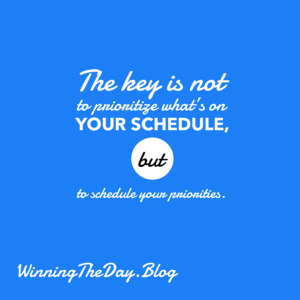
“The key is not to prioritize what’s on your schedule, but to schedule your priorities.” ~ Stephen Covey

Have you ever worked backward from Friday? At the end of the week, imagine you are sitting down and looking back…what would make this week great?

We can’t control the market this week, yet we can control the daily activities that lead to our expected outcomes.

I’m sure you would agree – without a doubt – we are in uncertain times. The paradox is this: we need both uncertainty and certainty in our business. Yet, from the conversations I’ve had this week, we have more uncertainty than certainty. How can we create more certainty?

Get Clear On What You Really Want.

You know this is really clear when your purpose resonates and moves you emotionally.

Make It Part Of Everyday!

  • Create a daily action checklist and follow it
  • What’s the ONE routine you must do every day to win the day?
    • Example: P.E.D.S.
      • Prayer
      • Exercise
      • Diet
      • Sleep
    • What are the one or two activities that move the needle?
      • Marketing that creates NEW appointments
      • Building and maintaining relationships
      • Servicing existing clients and prospects
      • Anticipating and solving problems BEFORE they arise
      • Completing that project
      • Closing open loops
    • Is it all in your calendar?

Have a strategy for when you feel stuck or lost.

  • “If I don’t do this, this is what it will cost me,” or
  • “If I do this, then this is what I can gain.”
  • I don’t feel like it” can be turned into “I’ll do it anyway.”

If you show up for the day with no structure in your calendar and decide to do “urgent” tasks like returning calls and texts and checking Facebook, those activities will expand and eat up all the time you hoped to devote to more “important” activities. You will end the day unfulfilled and have more uncertainty. Get clear on what you want, make it part of your everyday routine, and have a plan for when you feel stuck or lost. That is a winning formula.

The key is not to prioritize what’s on your schedule but to schedule your priorities.

The key is not to prioritize what's on your schedule, but to schedule your priorities.
The key is not to prioritize what’s on your schedule, but to schedule your priorities.

Ten Excuses

Ten excuses the top 1% all made, yet figured out a way to bust through:

1. I don’t have time

2. I don’t have the money

3. I will try it next year

4. I don’t have enough data

5. I am too tired, skeptical, or biased

6. No one ever did it before

7. It’s too much work

8. I could fail

9. I will wait until I retire

10. It’s too risky

You can bust through too. One of my associates told me all of these “excuses” are rooted in some sort of fear, so really the top 1% are masters of fear.

Fear or faith?
Fear or faith?

Somethings Are Just Hard

Near-death by a car accident, boot camp, Kilimanjaro Summit day, Hellmecula, Snowmageddon, Spartan Beast, crazy markets, and so much more.

Some things are just hard, and you want to quit.

I’ve made it through some tough situations with this one strategy: looking only a few steps, tasks or minutes ahead.

“Doing the next right thing.”

At certain times tunnel vision is a good thing.

Consider this – the next time getting through a challenge that seems like it might be too much for you. Lower your gaze to whatever the next minute, step, or task is right in front of you. Then take it.

There are times when big-picture thinking is needed. Yet the moments when you doubt you have the strength or the desire to put one foot in front of the other isn’t among them.

Do the next right thing.

Do The Next Right Thing!